
Ask ten developers or investors why they structured a project through a UAE free zone rather than on the mainland, and you’ll usually get the same short list of reasons: ownership, speed, and certainty. What’s less often explained is how those three things actually interact – and why the “right” free zone for one project can be the wrong one for another.
At Excellence FZE, structuring the entry point for a project is one of the first pieces of advice we give clients, because it shapes almost everything that follows: licensing timeline, permitted activities, ownership structure, and in some cases, the physical location a project can operate from.
The core appeal, briefly
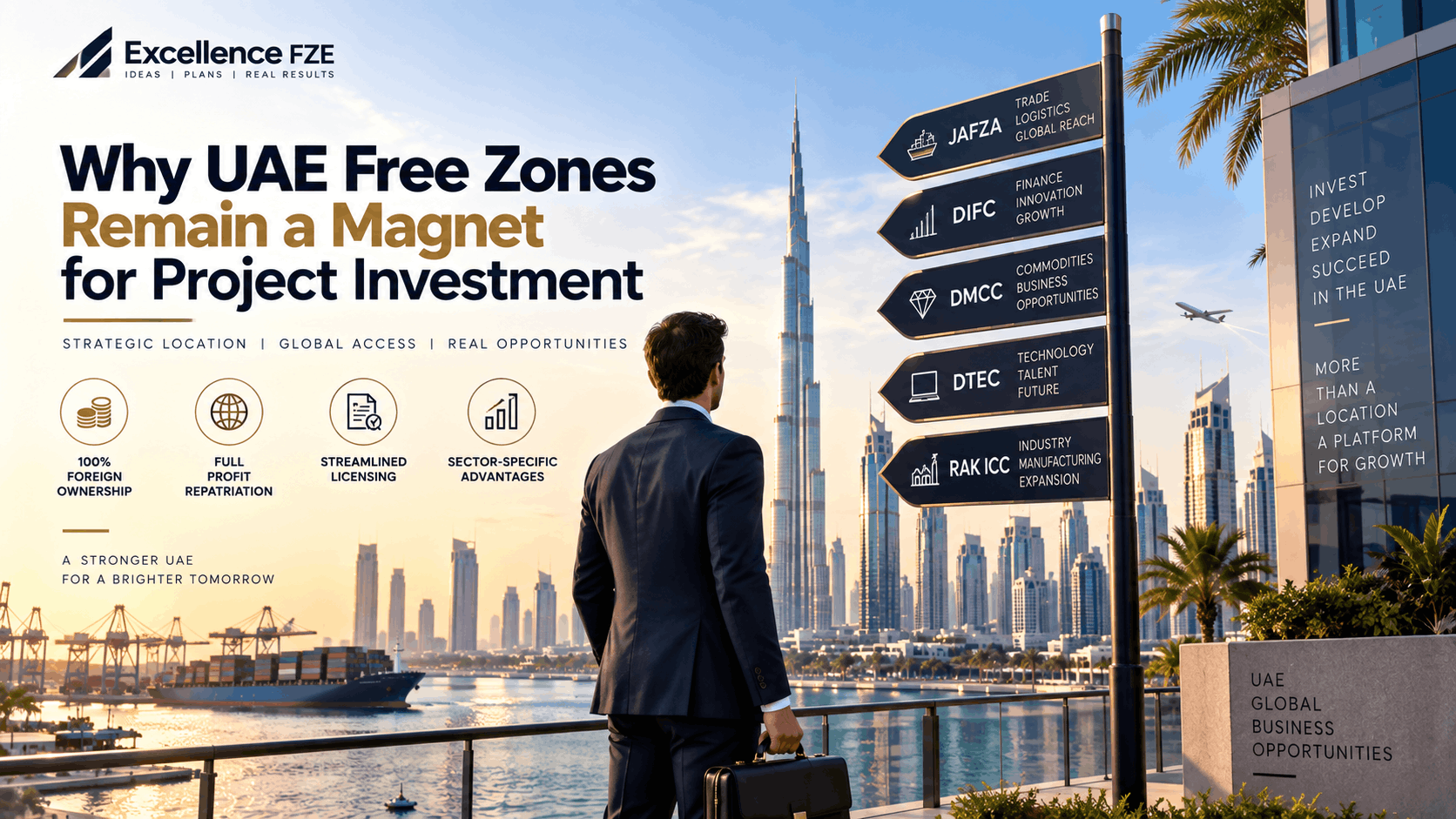
Free zones were built to remove the friction that historically made the UAE harder to invest in for foreign entities. The headline benefits are well known:
– 100% foreign ownership of the legal entity, without a local shareholder requirement
– Full repatriation of capital and profits, with no restriction on moving funds out of the UAE
– Streamlined licensing, often processed by a single free zone authority rather than multiple federal and local bodies
– Sector-specific infrastructure and incentives, particularly in zones built around logistics, media, technology, or industrial activity
None of this is new information to anyone who has looked at the UAE as an investment destination. What matters more, and gets far less airtime, is how to choose correctly among more than 40 free zones now operating across the Emirates.
Not all free zones solve the same problem
Free zones aren’t interchangeable, and treating them as such is one of the more expensive mistakes we see in early-stage project planning.
Some are built around a physical asset — a port, an airport, an industrial cluster – and make the most sense for businesses that genuinely need to operate from or near that infrastructure.
Some are built around a sector, offering licensing categories, ancillary services, and networking specifically suited to that industry, whether that’s media production, financial services, or commodities trading.
Some are built around cost and simplicity, aimed at smaller operations, consultancies, and holding structures that need a UAE presence without significant physical footprint requirements.
Choosing based on brand recognition or a general sense that “this is where similar companies are” tends to produce a license that technically works but structurally doesn’t fit – restricting activities the business will eventually want to add, or anchoring it to a location that adds cost without adding value.
Mainland is not the alternative it used to be
It’s worth noting that the gap between free zone and mainland has narrowed. Reforms over the past several years have opened 100% foreign ownership to most mainland activities as well, which means the free zone decision is no longer simply “foreign ownership: yes or no.” It’s now a genuine trade-off between:
– Free zone: typically faster to license, often lower initial cost, but usually restricted in trading directly with the UAE mainland market without an additional distributor arrangement or dual licensing setup
– Mainland: full access to the domestic market and government contracts, generally more suited to businesses whose primary customer base is inside the UAE itself
For a project development company, a hospitality operator, or a business planning significant local market activity, that distinction can matter more than any tax or ownership consideration.
The practical questions worth answering first
Before committing to a jurisdiction, we typically work through the following with a client:
1. Who is the actual customer, and are they inside the UAE, outside it, or both?
2. What licensed activities does the business need now, and realistically, in the next three years?
3. Does the business need a physical premises, and if so, does that requirement point to a specific zone?
4. What is the true cost of setup and renewal, including hidden costs like mandatory office space, visa quotas, and audit requirements?
5. What happens if the business needs to restructure, add a shareholder, or change activity later?
Answering these upfront avoids the common and costly pattern of a business outgrowing its licensing structure within the first two years and having to re-establish itself elsewhere.
Where this fits into project development
For developers and investors specifically, the free zone decision is rarely just a corporate formality – it interacts directly with financing, land or asset ownership eligibility, and the regulatory pathway a project has to follow. Getting this structure right at the outset removes a category of risk that otherwise resurfaces at the worst possible moment: mid-financing, mid-construction, or mid-negotiation.
This is the kind of decision that benefits from being made once, correctly, rather than adjusted after the fact.
Excellence FZE advises investors and developers on structuring, licensing and project delivery across the UAE. If you’re weighing free zone options for an upcoming project.